
September 4, 2025
Solicitors
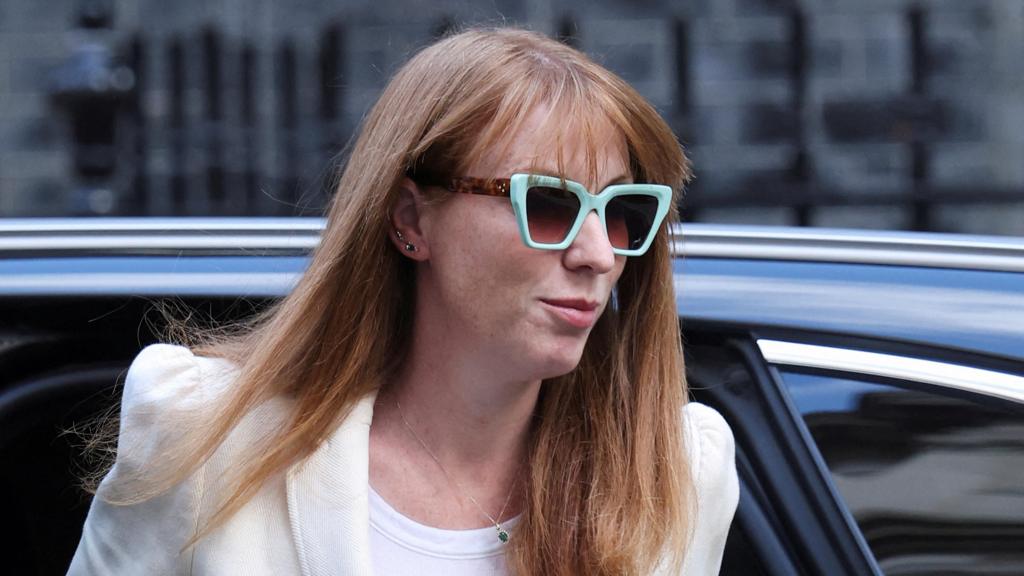
You may have seen in the news that Deputy Prime Minister Angela Rayner recently admitted she underpaid stamp duty on her £800,000 flat in Hove.
In her statement, she explained that the issue arose because her legal advice “did not properly take account” of her complex circumstances, which involved both divorce and a trust set up for her son with special educational needs. Having since taken specialist tax advice, she now faces a much larger SDLT liability.
This case is a clear reminder of just how complicated SDLT can be — particularly where trusts, divorce or family arrangements are involved. It also shows how stressful and costly errors can be for both clients and firms when advice doesn’t cover the full picture.
That’s where we can help. Our role is to support solicitors and their clients by:
Please don’t hesitate to pass on any SDLT cases that are proving complex — we’re here to make things easier for both you and your clients.
If you’d like to discuss how we can best support you and your clients, please do get in touch.
You can also download our Solicitors Guide here and all other forms of social media can be found here via our LinkTree.
And here is her full statement:
"Following the substantial scrutiny surrounding my living arrangements, I wanted to set out the facts as openly and transparently as I can.
Until now, an undertaking in a court order prevented me from disclosing information about certain aspects of my personal life. In the interests of public transparency, I applied to the court and I was last night released from this undertaking.
Family life can be complicated, and it is no secret that, like many families across the country, my domestic arrangements reflect these complexities. Throughout my career, I have always tried to be the best mum to my children, while managing the demanding realities of public service.
There has been a lot of speculation in recent days about my domestic arrangements and in particular the home I share with my ex-husband and my family. While I do not find it easy to publicly discuss personal and sometimes distressing family matters, I have always taken my responsibility as an MP and deputy prime minister seriously and tried to be as open as possible while protecting my family. To address the allegations made against me I have now taken the difficult decision to explain why my arrangements are as they are.
In 2023 my ex-husband and I divorced. As parents who have been through divorce will understand, the top priority for both of us during that process was the wellbeing of our children and helping them navigate this change. To provide maximum stability during this transition, we agreed to a nesting arrangement where the children remain in the family home full-time while we alternate living there. We also wanted to ensure that our child, who has special educational needs, was provided for as part of the divorce settlement.
A court-instructed trust was established in 2020 following a deeply personal and distressing incident involving my son as a premature baby. He was left with lifelong disabilities, and the trust was established to manage the award on his behalf – a standard practice in circumstances like ours.
To ensure he continued to have stability in the family home, which had been adapted for his needs, we agreed that our interest in the family home would be transferred to this court-instructed trust of which he is the sole beneficiary.
Some of the interest in our family home was transferred to the trust in 2023. In January 2025, I sold the remaining interest in the property to my son’s trust. This will give him the security of knowing the home is his, allowing him to continue to live in the home he feels safe in and grew up in. We transferred the property because it was in the best interests of our child. I acted as any parent would.
The sale of the property in Ashton-under-Lyne to the trust has not altered my family life. It remains my family home, as it has been for over a decade. It contains the majority of my possessions and it is where I am registered for most official and financial purposes ranging from credit cards to the dentist to the electoral roll. But most importantly, it is where my children live and have gone to school and now college, and where I regularly live while caring for them.
After I sold my stake to the trust, I bought a property in Hove in May 2025. Like many people, I used the lump sum from selling my stake in my Ashton home, which was the only property I owned and where my savings were, for the deposit on my new one. I obtained a mortgage to finance the rest. When purchasing the property my understanding, on advice from lawyers, was that my circumstances meant I was liable for the standard rate of stamp duty.
However, given the recent allegations in the press I have subsequently sought further advice from a leading tax counsel to review that position and to ensure I am fully compliant with all tax provisions. I have now been advised that although I did not own any other property at the time of the purchase, the application of complex deeming provisions which relate to my son’s trust gives rise to additional stamp duty liabilities. I acknowledge that due to my reliance on advice from lawyers which did not properly take account of these provisions, I did not pay the appropriate stamp duty at the time of the purchase. I am working with expert lawyers and with HMRC to resolve the matter and pay what is due.
The arrangements I have set out reflect the reality that family life is rarely straightforward, particularly when dealing with disability, divorce, and the complexities of ensuring your children’s long-term security. Every decision I have made has been guided by what I believe to be in my children’s best interests.
I deeply regret the error that has been made. I am committed to resolving this matter fully and providing the transparency that public service demands. It is for that reason I have today referred myself to the independent adviser on ministerial standards, and will provide him with my fullest cooperation and access to all the information he requires.”









Bell Howley Perrotton LLP is a limited liability partnership registered in England and Wales under number OC353525. Registered office: 20-22 Wenlock Road, London, N1 7GU. VAT number: GB 991703492.
BHP Advisory Ltd is a company registered in England and Wales under number 15240401. Registered office: 53 Davies Street, Mayfair, London, W1K 5JH. VAT number: GB 484722859.
