
June 1, 2026
Private Client
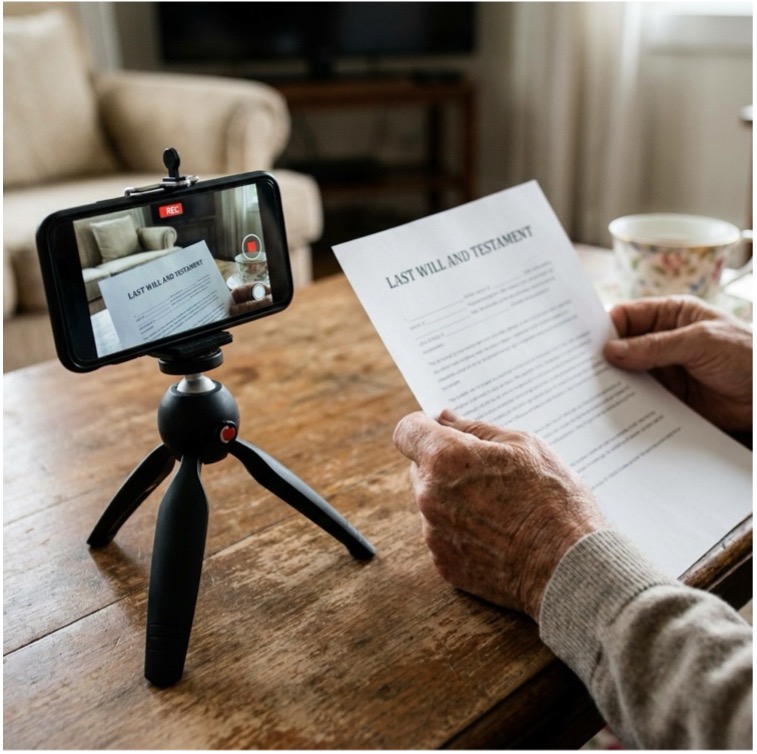
When a will is challenged after death, the court faces a difficult task. The person whose wishes matter most is no longer able to explain what they intended, leaving judges to reconstruct events using whatever evidence remains.
Traditionally, that evidence may include medical records, witness statements, solicitors’ attendance notes and other documents. Increasingly, however, courts are also being asked to consider video recordings made by the testator around the time a will was prepared and signed.
A recent case, Patel v O’Sullivan [2026] EWHC 801 (Ch), highlights just how persuasive this type of evidence can be.
The dispute concerned two wills made by the deceased in 2020. Following her death, one of her daughters challenged the later will, alleging that it did not reflect her mother’s true wishes and had been influenced by other family members.
In reaching his decision, the judge considered a range of evidence, including testimony from the solicitor who prepared the will and contemporaneous attendance notes. However, particular weight was given to video recordings made shortly before and on the day the will was signed.
The recordings showed the testator speaking clearly and appearing alert. In one video she explained, in her own words, that she had attended the solicitor voluntarily and that the contents of the will reflected her wishes. The judge described the recordings as providing significant reassurance that she knew and approved of the will she was signing.
Importantly, the court appeared to place greater value on footage where the testator spoke naturally and unprompted, rather than responding to leading questions. The timing of the recordings was also significant, with videos made close to the giving of instructions and execution of the will carrying the greatest evidential weight.
The case demonstrates that simple, authentic recordings can provide powerful evidence if a will is later challenged. A carefully staged or heavily scripted video may be less persuasive, but a genuine recording showing the testator discussing their wishes in their own words can help a court understand their intentions many years later.
That said, video evidence should not be seen as a substitute for proper legal advice. In Patel v O’Sullivan, the recordings were particularly effective because they were supported by detailed attendance notes and evidence from the solicitor who prepared the will. The case serves as a useful reminder that good record-keeping and careful will preparation remain essential.
While video recordings will not be appropriate in every situation, this decision suggests they can be a valuable tool where there is concern that a will may later be disputed. When combined with professional advice and robust documentation, they may provide some of the most compelling evidence available of a person’s genuine wishes.











Bell Howley Perrotton LLP is a limited liability partnership registered in England and Wales under number OC353525. Registered office: 20-22 Wenlock Road, London, N1 7GU. VAT number: GB 991703492.
BHP Advisory Ltd is a company registered in England and Wales under number 15240401. Registered office: 53 Davies Street, Mayfair, London, W1K 5JH. VAT number: GB 484722859.
