
September 24, 2025
Private Client
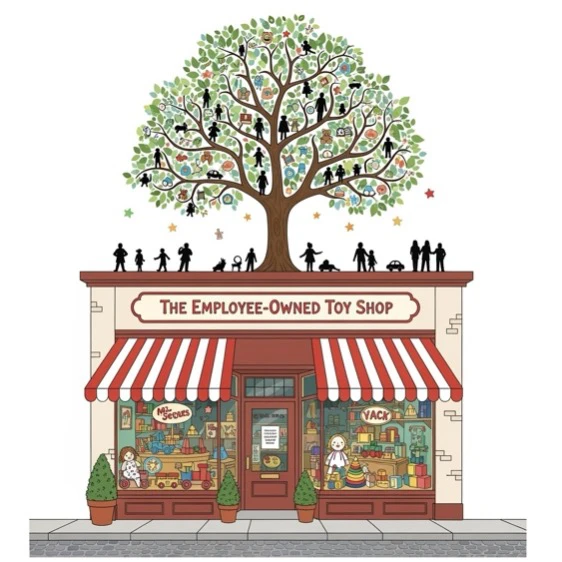
The Entertainer, one of the UK’s biggest toy shop chains, has announced that it will transfer full ownership of the business to its 1,900 staff through an Employee Ownership Trust (EOT). The move, which follows similar decisions by other well-known companies, highlights the growing appeal of employee ownership as a succession model.
An EOT is a trust set up for the benefit of a company’s employees. The trust acquires a controlling interest in the company from the selling shareholders, often funded by company profits over time. In The Entertainer’s case, 100% of the shares are being transferred into employee ownership, with the trustees responsible for holding and managing the shares on behalf of the staff.
There are a number of reasons why more businesses are exploring employee ownership:
Although the benefits are significant, EOTs come with complex statutory requirements. Trustees must hold a controlling interest in the business, employees must be able to benefit equally, and the purchase price cannot exceed market value. Care is needed to balance competing interests — for example, between paying bonuses to staff and ensuring selling shareholders receive deferred payments. Compliance must also be carefully maintained in the years following the transfer to protect tax relief.
For The Entertainer, which has grown into one of the UK’s best-known retailers since its founding in 1981, the decision reflects a desire to secure the company’s long-term future while rewarding the employees who helped build its success. With the mix of tax advantages, cultural preservation, and employee engagement, it is a model we are likely to see more of in the years ahead.











Bell Howley Perrotton LLP is a limited liability partnership registered in England and Wales under number OC353525. Registered office: 20-22 Wenlock Road, London, N1 7GU. VAT number: GB 991703492.
BHP Advisory Ltd is a company registered in England and Wales under number 15240401. Registered office: 53 Davies Street, Mayfair, London, W1K 5JH. VAT number: GB 484722859.
